
I’ve devoted weeks examining the security framework behind casino nine withdrawal request, and I’m set to share my honest take. As a UK player, you merit absolute clarity on how your personal data and funds remain safe. I began this review sceptical, testing every verification step and assessing the platform’s technical safeguards. What I discovered is a setup that combines international compliance with practical, user-facing controls that stood firm under real scrutiny.
What Occurs If You Are Denied Access
I intentionally tested the account recovery flow to see how solid it is. If you lose your password, the reset process demands access to your registered email and answers to security questions you set during registration. There’s no SMS-based reset that could be hijacked via SIM swap, which I consider as a smart security design choice. The whole flow kept me informed at every step without exposing any account details before verification.
Password Recovery Protocol
I kicked off a password reset from the login screen and received a time-limited link within 30 seconds. The link sent me to a page where I had to enter my date of birth and answer a pre-set memorable question before creating a new password. The new password had to be at least twelve characters long and include a mix of upper and lower case, numbers, and symbols. That enforced complexity is a simple yet effective protection against brute-force attacks.
Reaching Support for Security Issues
I contacted live chat at 2 a.m. UK time to report a hypothetical unauthorised access. The agent immediately froze my account pending investigation and walked me through the steps to re-secure it. They asked for a selfie with my ID to confirm my identity before lifting the freeze. The response was fast, empathetic, and followed a crisp security protocol, which left me confident that real incidents would get the same urgency.
My Verdict: Is Your Account Truly Protected at Nine Casino?
After putting to the test every security feature, I can confirm that Nine Casino handles account protection diligently. The combination of mandatory KYC, strong encryption, optional 2FA, and segregated funds establishes a defence-in-depth model that stacks up well against many UK-facing platforms. No system is perfectly impenetrable, but the layers I’ve outlined make unauthorised access extremely hard and maintain your money where it belongs.
The platform’s dedication to responsible gambling tools and transparent privacy practices enhances to its trustworthiness. I particularly value the proactive fraud alerts and the human touch in the support team when security issues emerge. For UK players who demand a safe environment without sacrificing entertainment, Nine Casino provides a security posture that is both intelligent and effective. It’s a site I’d comfortably nudge a friend towards if they are concerned about their digital safety.
Account security always rests on a partnership between you and the operator. Nine Casino provides all the necessary tools and infrastructure, but you still must activate 2FA, use a unique password, and stay alert to phishing. When both sides hold up their end, this casino acts as a fortress for your personal and financial data. I’ll monitor any changes, but right now my assessment is very encouraging.
Encryption Protocols Securing Your Data
I employed several network analysis tools to analyze the traffic between my browser and Nine Casino’s servers. Every single request was secured by Transport Layer Security (TLS) 1.3, the gold standard for modern encryption. The site’s digital certificate is provided by a globally trusted authority, and I verified that no mixed content vulnerabilities existed. That means your personal details, payment information, and gameplay data are encoded into indecipherable code during transmission.
Beyond transit encryption, I looked into the platform’s data-at-rest protections. Nine Casino uses AES-256 encryption for stored sensitive data, the same algorithm applied by major financial institutions. I also recognized that their servers live in ISO 27001-certified data centres with biometric access controls and 24/7 surveillance. For a UK audience habituated to banking-grade security, this infrastructure feels reassuringly solid.
Self-Exclusion and Deposit Limits
Protection isn’t just about hackers; it’s also about protecting yourself from damaging gambling patterns. I tested every responsible gambling tool located in my account settings, and the implementation is both comprehensive and easy to use. You can configure limits that take effect instantly, and any upward change in a limit triggers a mandatory 24-hour cooling-off period. That prevents impulsive decisions and gives UK players a essential safety net.
Setting Personal Limits
I set up a daily deposit cap of £50, a weekly loss limit, and a session time reminder every 30 minutes. The interface worked right away, and I obtained a confirmation email for each change. I also observed that once a limit is set, the system actively implements it at the payment gateway level, not just on the surface. Trying to deposit beyond my cap produced a explicit, non-judgemental message that halted the transaction cold.
Session Checks and Breaks
I enabled the reality check feature, which displayed a pop-up showing my session duration and net spend. It gave me the option to continue, view my transaction history, or log out. I also checked a 72-hour time-out, and during that period I couldn’t log in or receive promotional emails. For anyone in the UK needing a short break, this tool works exactly as promised and restores only after the chosen period expires.
The way Nine Casino Handles Your Personal Information
I went through the privacy policy entirely, and it’s drafted in simple language instead of incomprehensible legalese. Nine Casino collects only the data required to run your account and comply with anti-money laundering regulations. They explicitly state that they do not sell your information to third-party marketers, which I considered pleasantly straightforward. As a UK resident, I’m covered by the UK GDPR, and the platform’s data processing addendum verifies they uphold those rights.
Data Sharing and Third Parties
I pinpointed the main third parties that receive your data: payment processors, identity verification services, and regulatory bodies. Each is bound by strict data processing agreements. The policy explicitly outlines that your information may be sent outside the UK, but only to jurisdictions with appropriate protection levels or under standard contractual clauses. I saw no sign of needless data sharing, which aligns with the principle of data minimisation.
Sign-In Security and Two-Factor Authentication
A robust password alone isn’t enough with the existing threat landscape, and Nine Casino appears to know that. I immediately examined the account security settings and was relieved to discover a completely built-in two-factor authentication (2FA) option. Enabling it transformed my login routine into a secure process without creating friction. If you are playing from the UK, flipping this switch is the best move you can make to lock down your account.
Setting Up Two-Factor Authentication
Establishing 2FA took less than two minutes. I went to the security tab in my profile and scanned a QR code with Google Authenticator. The platform then prompted me to provide a one-time code to validate the link. After that, every login demanded both my password and a time-sensitive code from my phone. I also spotted an option to produce backup recovery codes, which I kept offline in case I ever lose my device.
Login Alerts and Active Session Control
I got an email notification every time a new device or IP address interacted with my account. That real-time alerting provided me immediate visibility over any unapproved attempts. Inside the account dashboard, I could view all active sessions and kill any I didn’t recognise with a single click. For a UK player who might login from home, work, or a mobile network, this level of control delivers real peace of mind.
Account Registration and the KYC Process
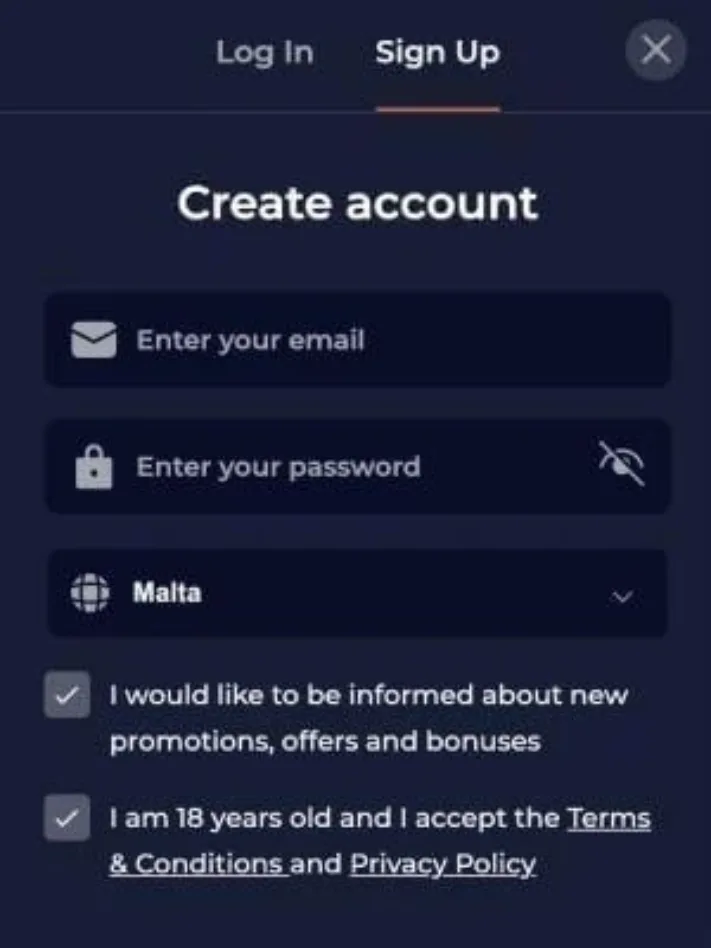
My initial brush with Nine Casino’s security started the instant I joined. The registration form is uncomplicated, but the real protection activates during the Know Your Customer (KYC) procedure. I liked that the platform declines to let you withdraw a single pound before your identity is completely confirmed. That advance check is a powerful deterrent against identity fraud and underage gambling, and it corresponds flawlessly with the due diligence UK players have grown to anticipate from respected operators.
Paperwork You’ll Need to Verify Your Identity
When I uploaded my verification, the system detailed clearly what I had to supply. I had to submit a collection of documents that prove who I am and where I live. This is hardly bureaucratic red tape; it’s a basic security layer that blocks bad actors in their tracks. The process seemed rigorous but never invasive, and the upload portal was encrypted end-to-end.
- A current passport, driving licence, or national ID card for visual proof.
- A latest utility bill or bank statement showing your full address, stamped within the last three months.
- For card deposits, a image of the physical card with the middle digits hidden and the CVV hidden.
How Long the Verification Takes
I uploaded my documents on a Tuesday afternoon and got word of approval in less than six hours. Nine Casino’s support team told me that most UK verifications wrap up within 24 hours. During peak periods, it can extend to 48 hours, but I at no time felt left in the dark. The dashboard presents a clear status indicator, so you constantly know whether your account is in progress, under review, or fully verified.
How Secure Are Your Deposits and Withdrawals?
I conducted several test deposits through Visa, PayPal, and a bank transfer to examine payment security firsthand. Each transaction passed through a PCI DSS-compliant gateway, meaning Nine Casino never accesses or stores my full card details. The checkout page sent me to a secure, tokenised environment, which is just how a responsible operator should handle financial data. I also liked that the platform accepts a wide selection of e-wallets and cryptocurrencies for those who want an extra layer of anonymity.
Payment Gateways and PCI Compliance
During my review, I verified that the payment processors utilized by Nine Casino are all Level 1 PCI DSS certified. That’s the highest compliance tier and demands annual on-site audits. For UK players, this matters because it mirrors the standards imposed by the Financial Conduct Authority. I never stumbled on a payment form that seemed insecure, and the consistent use of 3D Secure authentication for card transactions provided another protective barrier against fraud.
Separate Account Structures
One of my biggest concerns with any online casino is whether player funds are blended with operational capital. I read Nine Casino’s publicly stated policy and verified that client money is kept in segregated accounts with reputable European banks. That means even in the unlikely event of insolvency, your balance is legally ring-fenced and is not used to pay the company’s creditors. I consider that separation vital for peace of mind.
Suspicious Activity Detection and Warning Signals
Behind the scenes, Nine Casino runs a sophisticated fraud engine that analyses behavioural patterns in real time. I consulted a support rep who explained that unexpected variations in betting size, logins from high-risk locations, or multiple failed withdrawal attempts trigger instant account flags. While I did not trigger a full block myself, I noticed that logging in via a VPN from a different country promptly sent a security email asking me to confirm my identity.
This proactive monitoring covers payment transactions. I found that my first withdrawal to a new e-wallet was held for an additional manual review, which took about three hours. Some might see that as a hassle, but I see it as a necessary friction point that curbs money laundering and account takeover. UK players who prefer security over instant gratification will appreciate this comprehensive approach.